
The The Sardine Skewer, a classic in Fuengirola, and our signature dish
Before we start, let me make one thing clear: the perfect sardine skewer doesn't exist (or almost). Let me explain: to make the perfect sardine skewer you need to do it on the beach, on the shores of the Mediterranean, with olive wood and with the sardines my friend Kiko brings me. And this can't be overlooked. The sardine skewer isn't just the dish itself, it's the setting. If you're going to make a sardine skewer in November in Burgos, it doesn't matter when you turn the cane, because it just won't work the same way. I'm speaking from experience. Now, on to the content…
Who doesn't love a good sunny afternoon on the Costa del Sol, smelling the salt air and hearing the splash of the waves (or the hubbub of the beach bar, depending on your mood)? Well, there's nothing better to round it off than a sardine skewer, is there? But this dish isn't just a treat for the taste buds, it's also a piece of the history of Malaga cooking that has survived over the years.

What is a sardine espeto?
Sardines on the skewer are a typical dish of the province of Malaga, born as a simple way for local fishermen to cook their catch of the day. The sardines are threaded onto canes and usually grilled over olive-wood embers.
What fish are espetos made with?
Espetos are mainly made with sardines, although other fish are also prepared this way, such as gilt-head bream, sea bass or even octopus.
What does the Malaga espeto mean?
The Malaga espeto refers to a way of preparing fish in the province that involves cooking sardines (or other fish) skewered on a cane over olive-wood embers.
When is espeto season?
The sardine espeto season is usually the months without an «r» (in Spanish), from May to August. During this period sardines are tastier because of their higher fat content. This is due to the rising water temperature and the resulting increase in one of their favourite foods: plankton. This has given rise to the local saying: «Sardines, from Virgin to Virgin«.
Preparing and cooking sardine skewers
First, the ingredients
With 1 kilo of sardines you can make about 5 or 6 skewers of 6 or 7 sardines each. Let's say the sardines are medium-sized and you put 7 on each skewer. This is what you'll need:
How to thread (or «espetar») the sardines
The cane goes in through the top of the sardine, from the middle of the back, and comes out through its belly, taking care that the point doesn't damage the backbone. We leave the backbone on whichever side of the cane we choose (but always the same side). The backbone starts off facing the fire. This stops the fish from breaking and makes sure they cook well over the embers.

The embers
The embers should be neither too strong nor too weak. In other words, a steady fire to brown the whole skewer evenly. The skewer is placed leaning towards the embers, with the backbone facing the fire and the wind behind it, which keeps the fire lively and even.
Cooking
Coarse salt goes on just before you start grilling the sardines. Sprinkle it evenly over the whole skewer. It's important to remember where the backbone ended up once the fish are on the cane, because when you place the cane near the fire, the sardine's backbone must start off facing the fire, so that when you turn the cane to brown the other side, the backbone takes the weight and the sardine doesn't fall off the cane.
Let's get to it
Time takes on a special meaning here: it isn't the clock that sets the pace, but instinct and observation. How the skewer cooks depends on several things: the breeze, the heat of the embers and the size of the sardine. The breeze fans the flames so they cook faster, and if the sardines are small they'll need less cooking time. Try to keep the right distance so they don't burn, and watch that the wind doesn't burn the tails.
A fairly reliable sign that they're ready to come off the fire is the white colour of the sardine's eyes and the golden colour of the scales. Try not to overdo it so they don't burn or dry out. The same rule applies to the second side, which will need about half the time.
How do you eat espetos?
Tradition says that if you want to enjoy a sardine skewer, that means eating it with your hands. Lemon on the sardines? No thanks. Lemon is for afterwards.
You hold the sardine by the head and the tail and eat the fillets in bites, avoiding the backbone and the tail. We've sometimes seen people sucking the head… That's up to each of us. When you've finished, you order another one.
Who invented espetos?
Legend has it that their origins go back to the 19th century, when Miguel Martínez Soler, a fisherman from «El Palo», revolutionised cooking by coming up with the technique of threading sardines onto canes and grilling them over embers on the beach. His beach bar, a merendero back then, the «Gran Parada», was visited by King Alfonso XII in 1885, and that marked the start of this tradition, which lives on today.
Places serving sardine skewers on the Malaga coast have become a summer classic. Tradition says sardines are at their best between May and August, the months without the letter «r» in Spanish, when they have more fat and therefore an intense aroma and flavour. This has given rise to the local saying: «Sardines, from Virgin to Virgin«.
¿Who makes the best espetos in Fuengirola?
At La Cepa Playa, we do our best to keep this tradition alive in Fuengirola and share its authenticity and flavour with our visitors. It wouldn't be fair to claim that we make the best espetos in Fuengirola, but we can mention our well-deserved public's choice award at the 4th Ruta del Espeto, held in 2021.

What's our secret?
When Gurmé Málaga magazine included us among the best espetos in the province, they asked us exactly this, and the answer is still the same. Half of the success is the fish: we've had the same supplier for more than 40 years, who brings us the best fish in the province.
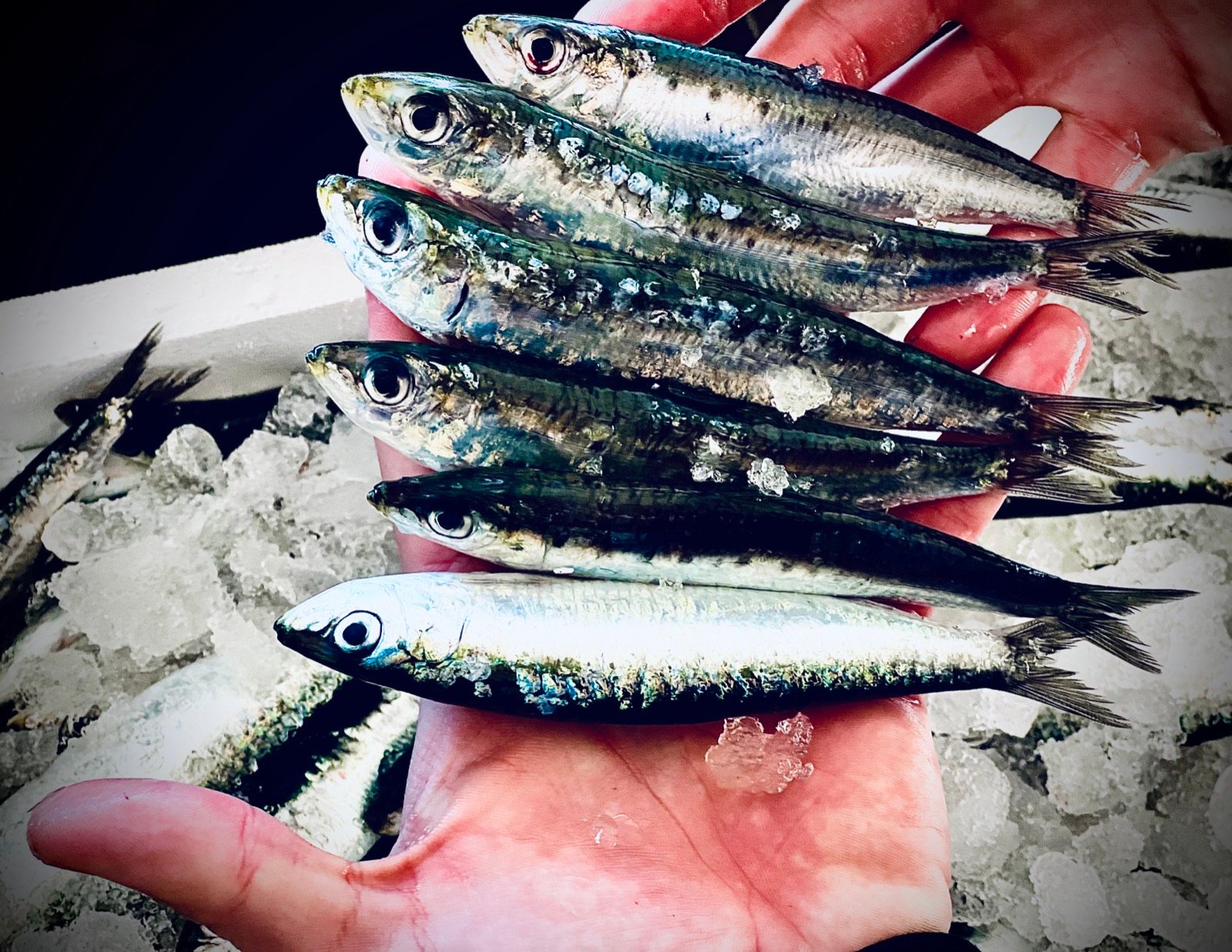
The other half is the fire and the espetero. Olive wood that makes plenty of embers, because sardines are cooked over glowing embers, not flames. And an espetero who knows what he's doing: when to move the cane away from the fire, how to place it depending on where the wind is coming from and at what angle, so that every sardine comes out just right.
Today it's Jorge, one of the family, who takes care of it, and he does it the way it's always been done at La Cepa: a craft that began three generations ago with my grandfather Antonio, grilling sardines on the sand.
Antonio Jiménez – La Cepa Playa